How to Avoid Probate?
Probate gets a bad rap. Everybody, always, wants to know -- how to avoid probate. The truth is that probate is usually not really so bad. But, it's also not so great, and sometimes it's terrible.
As discussed at Probate Court,the purpose of probate is to provide an orderly means to pay your debts and transfer your assets to your beneficiaries after you die. Unfortunately, there are costs and delays associated with probate. Those costs and delays will vary depending on the particular circumstances.
In the past few decades, living trusts
have increasingly been used to avoid probate. A living trust provides a
vehicle, so that property you own, that otherwise would have to be
probated, can avoid probate.
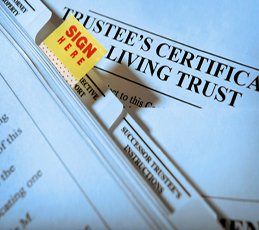
If assets are properly transferred (see Funding a Living Trust) to a living trust during your lifetime, upon death, those assets will not have to go through probate.
The
reason is that the assets are not in your name. They are in the living
trust’s name and the living trust lives on even after your death. By
the way, a husband and wife can both put their assets into the same
living trust and potentially avoid two separate probated estates (one
after husband’s death; another after wife’s death).
Of course,
not all assets have to go through probate. In fact, you probably
already own assets that will not go through probate upon your death.
Maybe you have a “Payable on Death” (POD) designation on file with your
bank account. Or, a life insurance or retirement account beneficiary
designation. The beneficiary of these assets will automatically obtain
ownership upon your death -- without the asset ever going through
probate.
So, it's certainly possible, in some cases, to avoid probate even without a living trust. Here's more information about what is subject to probate.
But,
alas, nothing in life is perfect and this goes doubly for joint
ownership of property. There are major problems with holding property
jointly – especially with your children. To find out more, read Joint Ownership Perils.
If you are married, you probably own many assets jointly with rights of survivorship. This means that when you die, those assets will automatically transfer to your spouse. If you are married, you probably own your home jointly as well as most of your bank accounts and other investments.
In fact, you may have very little that is not owned jointly with your spouse. So, you may not think probate is a major concern.
And it won’t be for you -- that is if you die first.
But,
what about the second spouse to die? After his or her death, all the
family’s assets will have to go through probate – unless they had
previously been transferred to a living trust.
And, even
worse, if the estate is large enough to have to pay estate tax, you just
threw away about $500,000. The reason is that because you transferred
all your assets to your spouse, at your death, you wasted your estate
tax exemption. If you don’t know what I’m talking about -- you should definitely check out Estate Tax and Credit Shelter Trusts.
Avoiding
probate can be particularly important if you own out-of-state real
estate. One of the problems with having out-of-state property is that,
upon your death, that property will likely have to be probated
separately in the state it is located (called an "ancillary probate
proceeding"). So, now you have a separate probate process, with
separate filings, fees, and perhaps a different attorney, to handle the
probate, in that state.
If the out-of-state property
was in your living trust, it would not be in your name upon your death,
and no probate would be necessary. The property could pass to your
heirs according to the terms of the trust – without probate.
The bottom line
is that avoiding probate can be a big advantage of a living trust.
This is especially true if you own out-of-state real estate.
A living trust is certainly one good answer to the question of how to avoid probate.
You can read all about my executor story at How to Probate an Estate.
What's On Your Mind?
We'd love to hear your comments or opinions. Submit them here and other visitors can read them and comment on them. An e-mail address is not required.
What Other Visitors Have Said
Click below to see contributions from other visitors to this page...
Can I Just Copy My Father's Living Trust For My Own? Not rated yet
My father recently passed, leaving his assets in a trust with me as the trustee and only beneficiary. I want to set up a trust of my own, naming one son …
From How to Avoid Probate to Probate Court
Home Page | About Us | Contact Us | Site Search | Advertise


New! Comments
Leave a comment about this article in the box below and share it with your Facebook friends.